

 Ghana
 Côte d'Ivoire
 Senegal
 Kenya
 Egypt
 South Africa
 United States
 United Kingdom
 China
 India

What this means
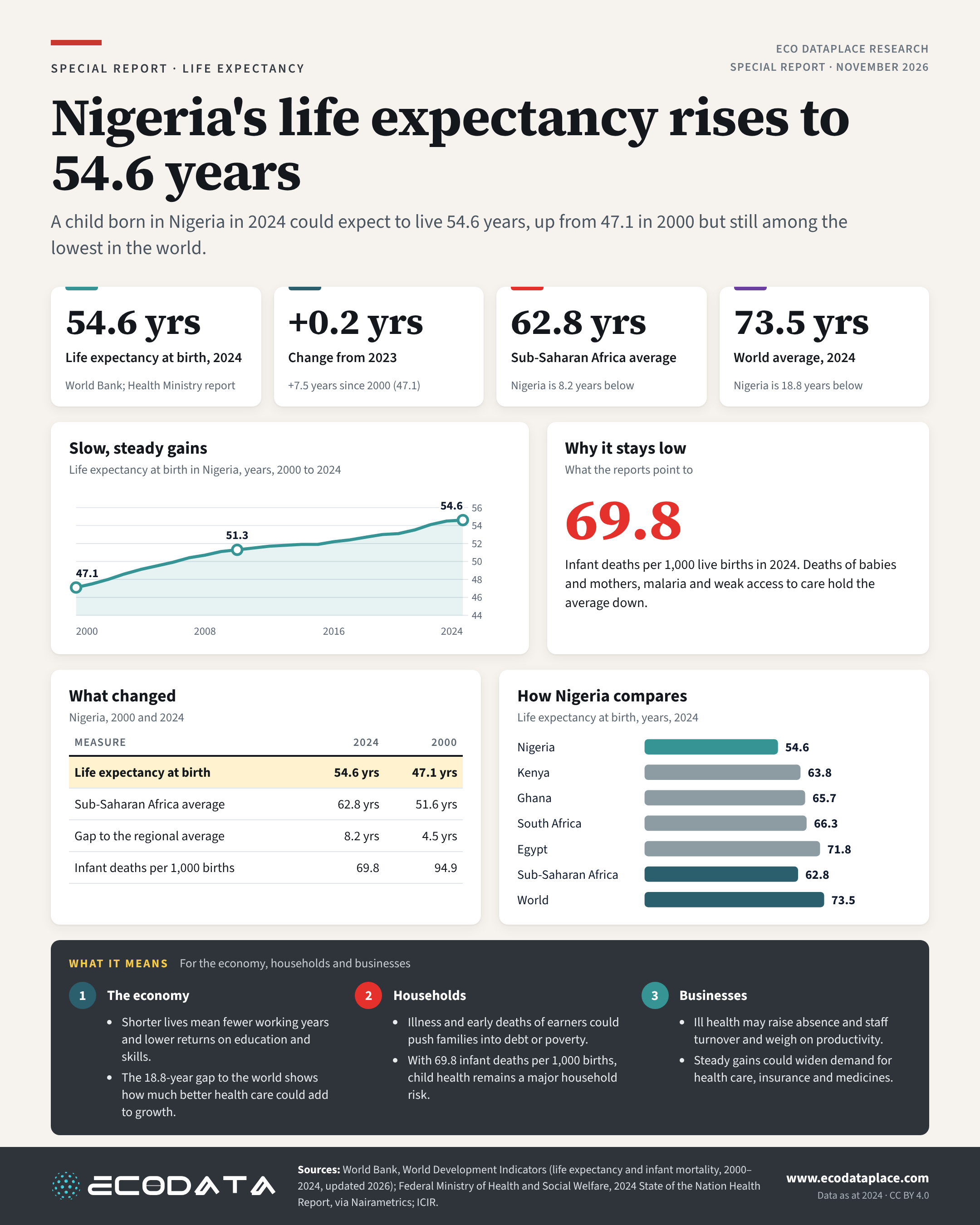
World Bank data show that a child born in Nigeria in 2024 could expect to live 54.6 years, up 0.2 years on 2023 and 7.5 years since 2000. The Federal Ministry of Health’s 2024 State of the Nation Health Report gives the same figure. Gains have been steady but slow: Nigeria is now 8.2 years below the sub-Saharan African average of 62.8, a gap that has widened from 4.5 years in 2000, and 18.8 years below the world average of 73.5.
For the economy
Shorter lives mean fewer working years and lower returns on spending on education and skills. The size of the gap with peers such as Kenya (63.8) and Ghana (65.7) suggests better health care could add materially to output over time.
For households
Illness and the early death of earners can push families into debt or poverty, especially where treatment is paid for out of pocket. With 69.8 infant deaths per 1,000 live births in 2024, child health remains one of the largest risks families face.
For businesses
Poor health may raise absence and staff turnover and weigh on productivity. At the same time, continued gains in life expectancy could widen demand for health care, insurance, medicines and services for older people.
For information only; not investment or tax advice.