

 Ghana
 Côte d'Ivoire
 Senegal
 Kenya
 Egypt
 South Africa
 United States
 United Kingdom
 China
 India

What this means
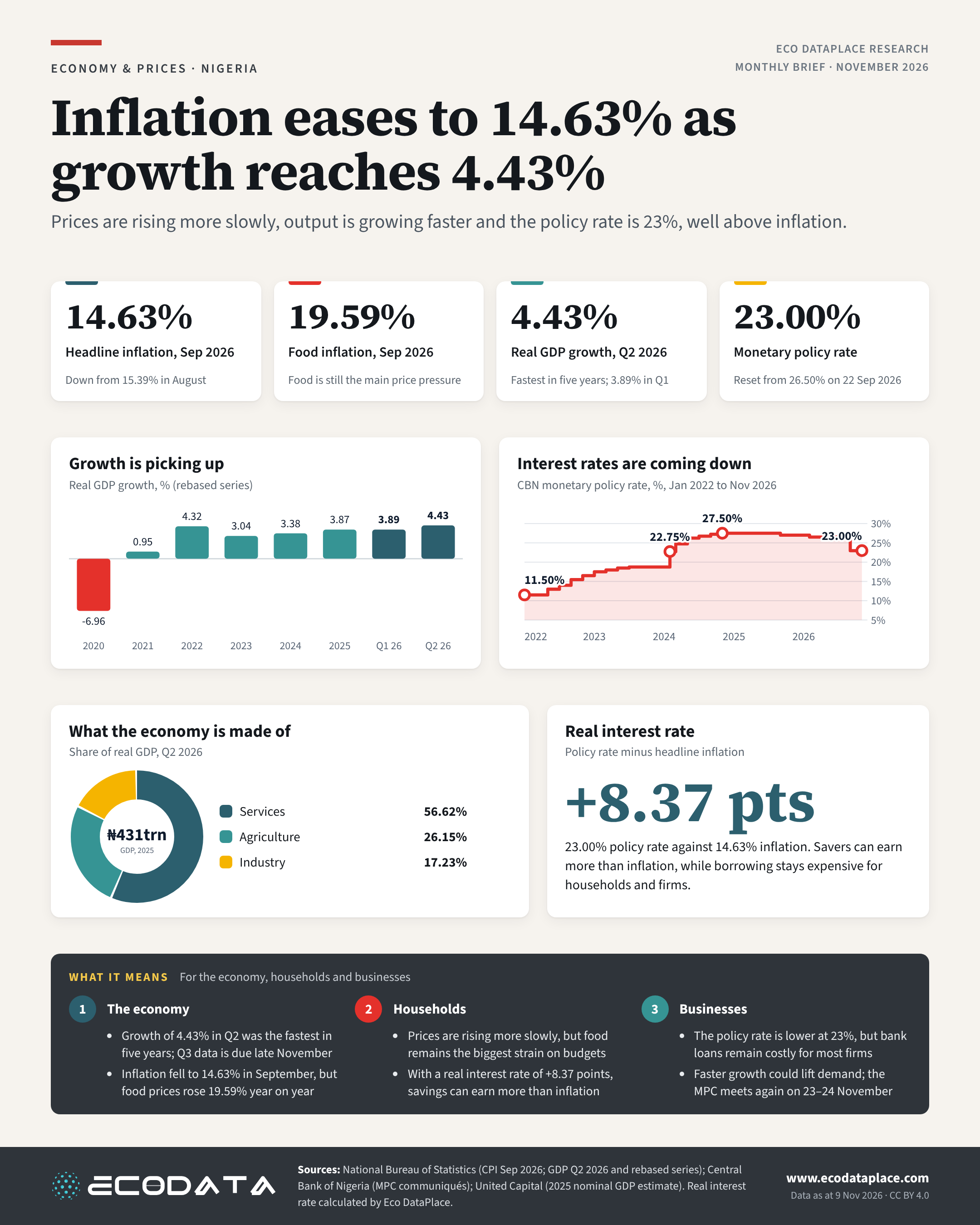
Inflation slowed to 14.63% in September from 15.39% in August, while real GDP grew 4.43% in Q2 2026, the fastest pace in five years. With the policy rate at 23.00%, the real interest rate is about 8.37 percentage points, so monetary conditions remain tight even after September’s cut.
For the economy
Faster growth and slower inflation are a better mix than a year ago. Services make up 56.62% of real output. Q3 GDP figures are due from the NBS in late November, and the MPC meets again on 23–24 November.
For households
Prices are still rising, but more slowly. Food inflation of 19.59% remains the main strain on budgets. A positive real interest rate means some savings products can earn more than inflation, while loans stay expensive.
For businesses
Bank lending rates may fall only gradually after the cut to 23.00%. Stronger growth could support demand, but high food and energy costs still weigh on margins.
For information only; not investment or tax advice.