

 Ghana
 Côte d'Ivoire
 Senegal
 Kenya
 Egypt
 South Africa
 United States
 United Kingdom
 China
 India

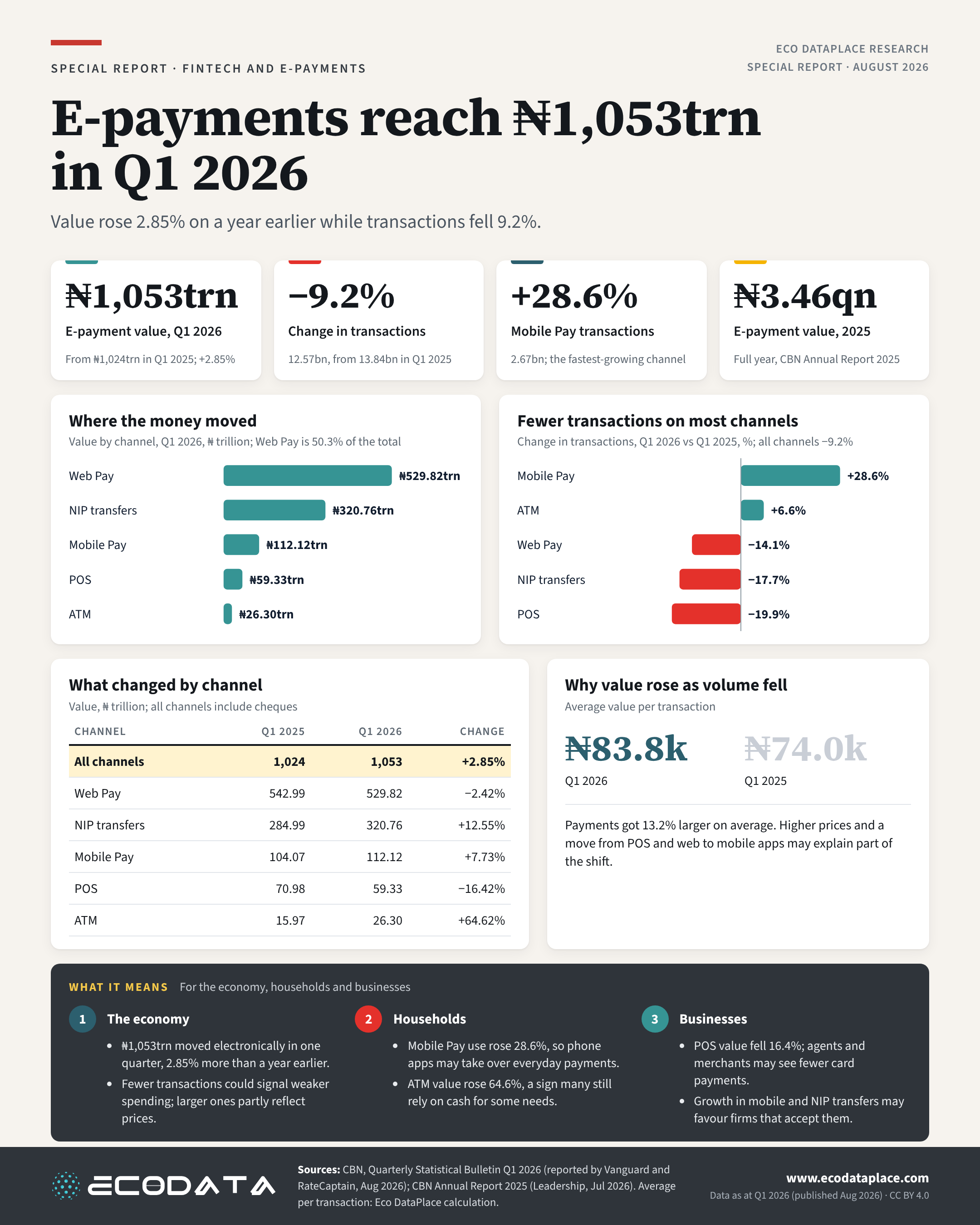
What this means
Nigerians moved ₦1,053 trillion through electronic channels in the first quarter of 2026, 2.85% more than the ₦1,024 trillion of a year earlier, according to the CBN’s quarterly statistical bulletin. The number of transactions fell 9.2% to 12.57 billion, so the average payment rose by 13.2% to about ₦83,800.
For the economy
Web Pay (₦529.82 trillion) and NIP transfers (₦320.76 trillion) carried more than four-fifths of the value. Fewer transactions could point to softer spending, while larger payments partly reflect higher prices. For the full year 2025, the CBN put e-payments at ₦3.46 quadrillion.
For households
Mobile Pay was the fastest-growing channel, with transactions up 28.6% to 2.67 billion, so phone apps may take a bigger share of everyday payments. ATM value rose 64.6% to ₦26.30 trillion, a sign that many households still rely on cash for some needs.
For businesses
POS value fell 16.4% to ₦59.33 trillion and POS transactions fell 19.9%, which could mean fewer card payments for agents and merchants. Growth in NIP and mobile transfers may favour firms that accept them and settle quickly.
For information only; not investment or tax advice.