

 Ghana
 Côte d'Ivoire
 Senegal
 Kenya
 Egypt
 South Africa
 United States
 United Kingdom
 China
 India

What this means
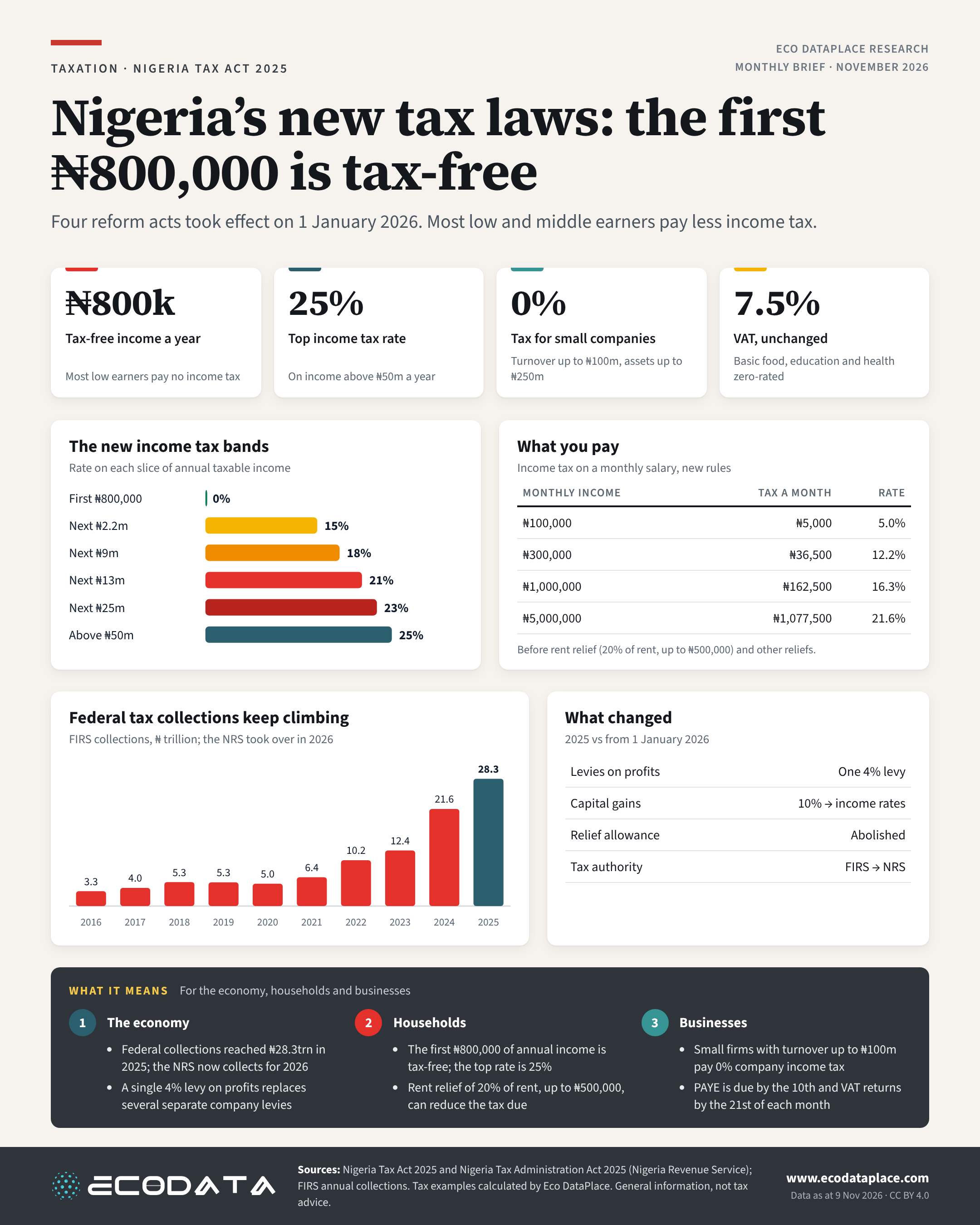
Four tax reform acts took effect on 1 January 2026. The first ₦800,000 of annual income is tax-free, the top rate of 25% applies above ₦50m, and VAT remains 7.5%. Most low and middle earners pay less income tax than before.
For the economy
Federal collections reached ₦28.3trn in 2025, and the Nigeria Revenue Service has replaced the FIRS as collector. A single 4% levy on profits replaces several separate company levies.
For households
A worker earning ₦300,000 a month pays about ₦36,500 a month before reliefs, an effective rate of 12.2%. Rent relief of 20% of rent, up to ₦500,000 a year, can reduce the tax due. Capital gains are now taxed at income rates.
For businesses
Small companies with turnover up to ₦100m and assets up to ₦250m pay 0% company income tax. PAYE is due by the 10th and VAT returns by the 21st of each month.
For information only; not investment or tax advice.