

 Ghana
 Côte d'Ivoire
 Senegal
 Kenya
 Egypt
 South Africa
 United States
 United Kingdom
 China
 India

What this means
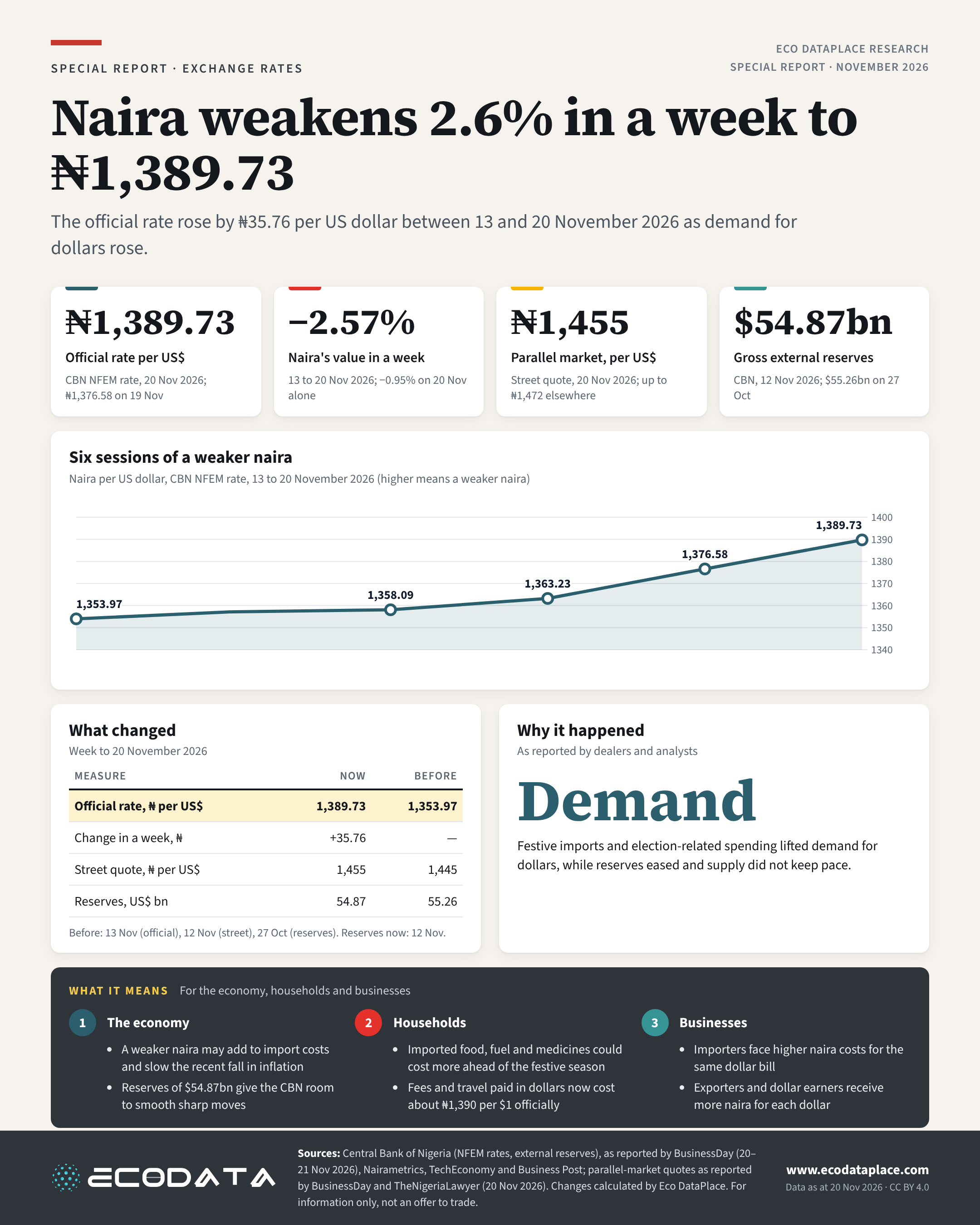
The naira weakened to ₦1,389.73 per US dollar at the official market on 20 November 2026, from ₦1,353.97 on 13 November. That is a 2.6% fall in a week, after five straight sessions of losses, as festive and election-related demand for dollars rose.
For the economy
A weaker naira raises the cost of imports and could slow the fall in inflation, which eased to 14.06% in October (NBS). Gross reserves of $54.87bn on 12 November give the Central Bank room to smooth sharp moves, although they fell by $391m in the 16 days to that date.
For households
Imported food, fuel and medicines may cost more ahead of the festive season. School fees, travel and other bills paid in dollars now cost about ₦1,390 per dollar at the official rate, and street quotes ranged from ₦1,455 to ₦1,472 on 20 November.
For businesses
Importers need more naira for the same dollar bill, which could squeeze margins or push up prices. Exporters and firms that earn dollars receive more naira for each dollar. The Monetary Policy Committee meets on 23–24 November 2026.
For information only; not investment or tax advice.